Aug 12, 2026 | Education & Awareness
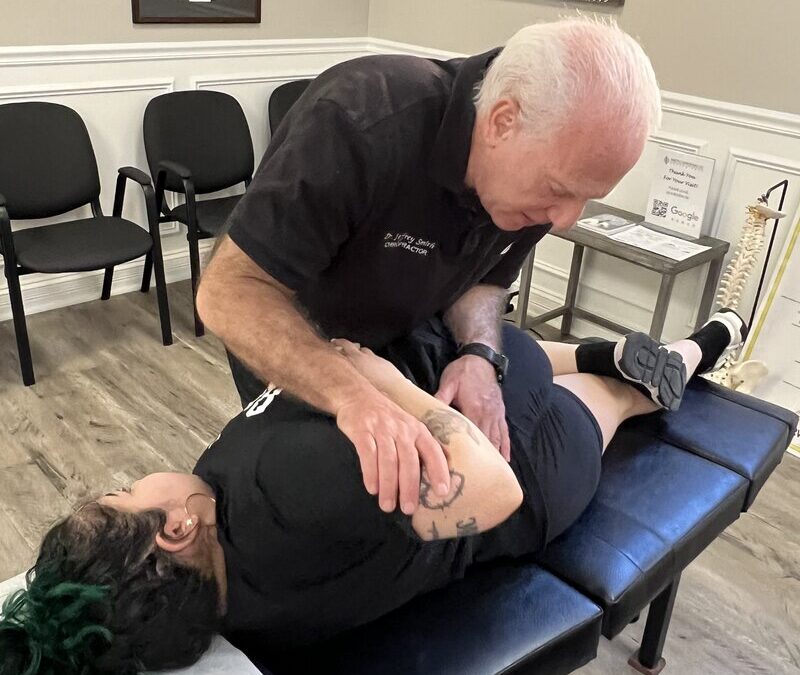
Most people do not think about their spine until something starts to hurt. Maybe it is a stiff neck after a long day at a desk. Maybe it is a dull ache in your lower back that shows up every evening. Maybe you just feel tight, tired, and a little off, without being able to point to one specific injury. If any of that sounds familiar, you are far from alone. Neck pain, back pain, and everyday discomfort are some of the most common reasons people seek chiropractic care for pain relief.
Common Causes of Neck Pain and Back Pain
Neck and back pain don’t always come from one dramatic event. More often, they build up slowly. Sitting for long stretches, looking down at a phone, carrying kids or groceries the same way every time, sleeping in an awkward position, or simply going through years of daily wear and tear can all put stress on the spine and the muscles that support it.
When certain joints or surrounding muscles are not moving comfortably, other areas can sometimes compensate. Over time, that extra effort can contribute to tension, stiffness, and pain. It can be a sign that the area needs attention.
How Chiropractic Treatment May Help With Pain
Chiropractic treatment focuses on the spine and surrounding joints, muscles, and nerves. When movement becomes restricted or uncomfortable, nearby muscles may tighten and normal movement can become more difficult. Chiropractic adjustments are intended to improve joint motion and may help reduce pain and stiffness while supporting better function.
This isn’t just about cracking your back or making a popping sound. It’s about identifying where movement is restricted and using targeted chiropractic care to help improve how those areas move and function.
Chiropractic Care for Neck Pain
Neck pain often comes from posture habits that build up over months or years. Looking down at a phone or computer screen for hours a day can put added strain on the neck and upper back. Chiropractic care for neck pain begins with an evaluation of the alignment and movement of your cervical spine, followed by targeted treatment based on what we find.
Chiropractic Care for Back Pain
Back pain can show up in the lower back, mid back, or both, and the cause is different for everyone. Some patients strain a muscle by lifting something the wrong way. Others develop pain gradually from sitting too much or from an old injury that continues to cause discomfort. Chiropractic care for back pain can focus on movement, joint function, and other mechanical factors that may be contributing to your symptoms.
Chiropractic Care for Pain, Stiffness, and Everyday Discomfort
Not every ache has a dramatic story behind it. Stiffness when you get out of bed, tightness after a workout, or general tension from a stressful week all fall into this category. These smaller issues can be worth evaluating when they persist, become more frequent, or begin interfering with your normal activities.
What to Expect From Chiropractic Treatment
Every new patient starts with a thorough evaluation. We look at your posture, range of motion, and how your spine is functioning, and we talk with you about your daily habits and history. From there, we build a plan specific to you. Treatment might include spinal adjustments, soft tissue work, and simple exercises or posture recommendations you can use at home to support the work we do in the office.
Some patients notice improvement within the first few visits, while others may need more time depending on their symptoms, history, and response to care.
Chiropractic Care for Pain Relief in Elmwood Park
You do not have to ignore constant tension in your neck, a nagging ache in your back, or general discomfort that has become part of your daily routine. Chiropractic care for pain relief offers a drug-free approach that may help reduce discomfort, improve movement, and make everyday activities more comfortable.
If you are ready to feel better, we would love to see you at Smith Chiropractic Health Care in Elmwood Park. Give us a call at (708) 456-8844 to schedule an appointment.
Jun 10, 2026 | Education & Awareness
As parents, we want our kids to feel good, sleep well, move well, grow strong, and enjoy being kids. We want them running, playing, learning, laughing, and thriving; not constantly uncomfortable, tense, tired, or struggling with the same issues over and over again.
That is one of the reasons more parents are asking about chiropractic care for kids.
Many health-conscious parents are looking for natural, gentle, preventive ways to support their child’s body. They may be dealing with:
- a baby who has reflux or trouble sleeping
- a school-age child with posture changes from screens
- a teen athlete who always seems tight or sore
Sometimes parents simply notice that something seems “off,” even if their child is not complaining of pain.
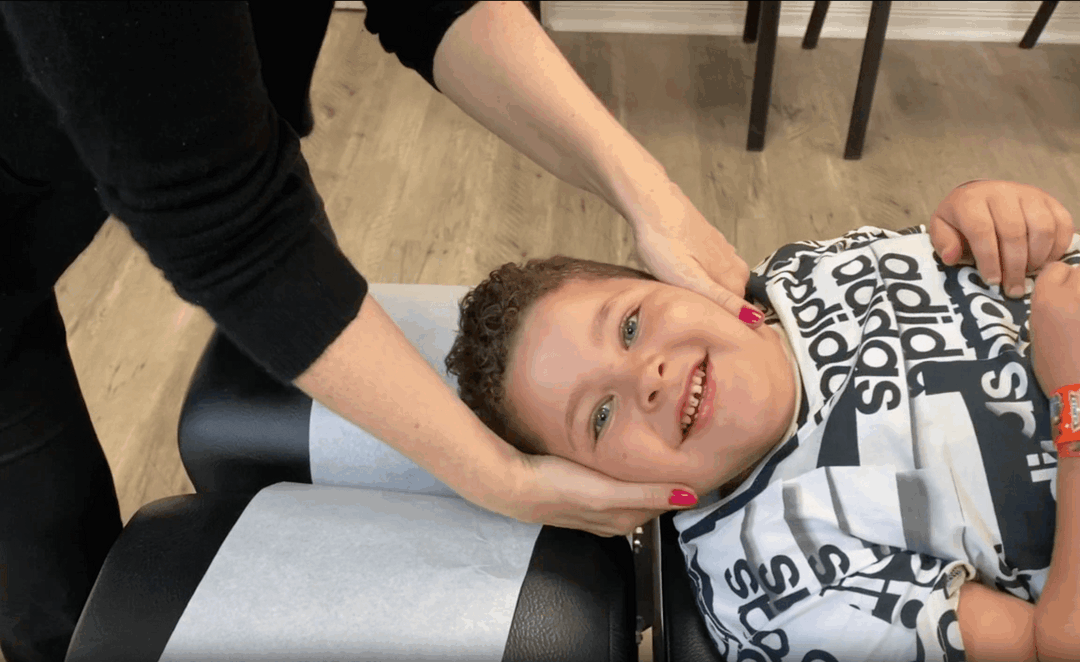
At Smith Chiropractic, pediatric chiropractic care is not about treating children like small adults. Kids are different. Their bodies are growing, changing, and adapting constantly, so their care should be gentle, specific, and age-appropriate.
What Is Pediatric Chiropractic?
Pediatric chiropractic focuses on how a child’s spine, joints, posture, and nervous system are functioning.
Your child’s spine protects the spinal cord, which is part of the communication system between the brain and the rest of the body. That communication affects movement, sleep, digestion, coordination, posture, stress response, and overall regulation.
When spinal joints are not moving the way they should, the body may start compensating. That can show up as tension, stiffness, posture changes, discomfort, or changes in how the body functions.
A kids chiropractor looks for areas where motion is restricted and works to restore healthier movement. The goal is not to “crack backs” or chase symptoms. The goal is to help the body move and function better so it has the best opportunity to heal, grow, and adapt.
Is Chiropractic Care for Kids Safe?
This is usually the first question parents ask… and it should be.
Yes, pediatric chiropractic care is very gentle when it is done properly. Adjustments are always adapted to the child’s age, size, development, comfort level, and clinical needs.
With babies, there is no forceful twisting, cracking, or thrusting. Infant adjustments use extremely light pressure. It is nothing like the adult adjustments people often imagine when they think of chiropractic care.
With older children and teens, techniques may look different depending on the child. Some children do well with gentle manual adjustments. Others are more comfortable with low-force instrument-assisted care, such as ArthroStim®, which allows us to deliver quick, specific, gentle impulses without the traditional popping or cracking sound.
We also take a conservative approach to imaging. Babies are not routinely X-rayed. Older children are only considered for imaging when there is a clear clinical reason, such as trauma, possible scoliosis, significant posture concerns, or a lack of response to care.
Parents should always understand what is being done and why. Nothing about your child’s care should feel rushed, confusing, or pressured.
Why Parents Bring Kids to a Chiropractor
Children go through a lot physically.
Birth itself can be stressful on a baby’s body. Then come growth spurts, learning to roll, crawl, walk, run, jump, fall, climb, wrestle, play sports, carry backpacks, look down at screens, and sit for long periods at school.
That is a lot of wear and tear for a growing spine.
Parents often bring children to a chiropractor for concerns such as:
- colic
- reflux
- constipation
- poor sleep
- recurring ear or sinus issues
- headaches
- posture changes
- tech neck
- growing pains
- sports strain
- general wellness
Sometimes kids have obvious pain. Many times, they do not. Pain is often the last sign that something is not functioning well. Children may show stress in other ways first, such as irritability, trouble settling, poor sleep, digestive issues, posture changes, or vague complaints they cannot explain clearly.
That is why chiropractic for kids is often proactive. Parents are not always waiting for a crisis. They want to know whether their child’s body is moving, adapting, and functioning the way it should.
Key Pediatric Chiropractic Benefits
Every child is different, so no one should promise the same result for every child. There are, however, several pediatric chiropractic benefits for which parents commonly look.
One of the biggest is posture support. Kids today spend a lot of time looking down at:
- tablets
- phones
- laptops
- homework
- gaming systems
Over time, that forward head posture can place stress on the neck, upper back, and spine.
Chiropractic care may help restore better spinal motion and reduce tension patterns related to posture, backpacks, school habits, and screen use.
Another benefit is mobility. Active kids and teen athletes ask a lot from their bodies. When joints are restricted, movement becomes less efficient. That can contribute to tightness, soreness, slower recovery, or overuse patterns. Chiropractic care can help support better range of motion and healthier movement.
Parents also often seek care for sleep, digestion, and nervous system regulation. The nervous system plays a role in how the body settles, digests, moves, and responds to stress. When the spine is moving better, the body may regulate more efficiently.
For many families, chiropractic care for kids is also about prevention. It is much easier to address small stress patterns early than to wait until a child has years of compensation built into their posture and movement.
Signs Your Child May Benefit From Being Checked
You do not need to wait until your child has severe pain to ask whether chiropractic care may be appropriate.
Some signs your child may benefit from being checked include:
- Your baby has trouble feeding, sleeping, or settling
- Your baby prefers turning the head one way
- Your child has recurring reflux, constipation, or digestive discomfort
- Your child has repeated ear or sinus concerns
- Your child complains of headaches, neck pain, back pain, or growing pains
- Your child has visible posture changes or tech neck
- Your child has frequent falls or seems unusually clumsy
- Your child has sports strain or slow recovery
- Your child seems uncomfortable but cannot clearly explain why
Of course, chiropractic care does not replace your pediatrician. If your child has severe, sudden, unusual, or concerning symptoms, they should be evaluated by the appropriate medical provider. A good chiropractor should know when to refer out.
What to Expect at Smith Chiropractic
At Smith Chiropractic, we want families to feel comfortable from the moment they walk in.
Our office is warm, friendly, and family-centered. We take your child’s health seriously, but we do not believe a healthcare office has to feel cold or scary. Kids should feel welcome. Parents should feel heard.
Your child’s first visit begins with a conversation. We want to understand what is going on, what you have noticed, and what your goals are. Depending on your child’s age and concerns, we may talk about:
- birth history
- sleep
- digestion
- posture
- school habits
- sports
- activity level
- symptoms
- lifestyle
From there, we perform a gentle exam and posture evaluation when appropriate. If an adjustment is recommended, we explain it first. The technique is always adapted to your child.
Some children need only very light care. Some older children and teens may need a different approach. Some kids are nervous, and that is okay. We can slow down, explain, modify, or use gentle tools like ArthroStim® when appropriate.
Parents are part of the process. We want you to ask questions. We want you to understand what we are seeing and why we are recommending care.
How Often Should Kids See a Chiropractor?
There is no one answer for every child.
Frequency depends on age, symptoms, activity level, posture, stress, and goals. A baby with a specific concern may start with more frequent visits for a short time and then taper as things improve. A healthy child may do well with periodic wellness visits about once a month or every six weeks. A teen athlete may benefit from more consistent care during an active sports season.
There is no required lifetime commitment. Many families choose ongoing wellness care because they see chiropractic as part of their healthy lifestyle, similar to exercise, good nutrition, sleep, and stress management.
Our goal is not to create pressure. Our goal is to help you make informed decisions for your child.
Helping Kids Thrive Naturally
Chiropractic care for kids is about much more than back pain.
It is about helping children move better, sit better, sleep better, recover better, and function better. It is about supporting posture, mobility, comfort, digestion, nervous system regulation, sports recovery, and long-term wellness in a gentle, natural way.
For health-conscious parents, pediatric chiropractic offers a proactive option. Instead of waiting for small stress patterns to become bigger problems, you can have your child checked, ask questions, and learn what may support their growing body.
At Smith Chiropractic, we love caring for families. Whether you have a newborn, a busy toddler, a screen-loving school-age child, or a teen athlete, we are here to provide gentle, personalized, family-centered care.
If you are wondering whether your child could benefit from seeing a kids chiropractor, we would be happy to talk with you, answer your questions, and help you decide whether pediatric chiropractic care is a good fit for your family. To get started, all you have to do is schedule a consultation.
Apr 10, 2026 | Education & Awareness
Are you still dealing with that same neck pain, low back tightness, headache, or stiffness over and over? Maybe you’ve asked yourself: Do I just need an adjustment, or do I need actual treatment?
Many people use those terms like they mean the same thing. They don’t.
A chiropractic adjustment is one specific thing we do. Chiropractic treatment is the bigger picture. It is the process of evaluating what is going on, deciding what your body needs, and creating a plan that helps you move better, heal better, and function better over time.
While it might seem inconsequential to some, that distinction between adjustment and treatment really matters, especially if you are someone who wants relief now but is also tired of repeating the same cycle. There is nothing wrong with wanting to feel better quickly. Of course you do. If your symptoms keep coming back, though, it’s worth considering whether short-term relief is enough or whether your body may require a more complete approach.
What Is a Chiropractic Adjustment?
To be direct: a chiropractic adjustment is a specific, controlled movement used to restore motion to a joint that is not moving the way it should.
Often, people think of the spine, and that is a big part of it. When a joint becomes restricted, the surrounding muscles will often tighten up, nearby tissues can become irritated, and your body starts compensating. In time, that compensation can show up as pain, stiffness, reduced mobility, headaches, tension, or flare-ups that seem to have no real cause.
The purpose of an adjustment is not just to make a sound or create a temporary sensation of relief. The goal is to improve motion and reduce mechanical stress so the body can function more normally.
Some adjustments are done by hand. Others are done with gentle tools or specialized tables. At Smith Chiropractic Health Care, we tailor the technique to the patient. Some people do great with manual adjusting. Others prefer lower-force options like drop table techniques or instrument-assisted adjusting such as ArthroStim. There is no prize for doing things the hardest way. The best adjustment is the one that is appropriate for your body, your comfort level, and your specific condition.
What Is Chiropractic Treatment?
Chiropractic treatment is broader than the adjustment itself.
Treatment includes the adjustment, but it also includes everything that helps us understand why the problem is there in the first place and what needs to happen to improve it. That can include your consultation, health history, spinal exam, posture analysis, movement testing, and when clinically appropriate, standing X-rays. It also includes your personalized care recommendations, progress checks, and any simple at-home support we give you to help reinforce the work we are doing in the office.
This is where a lot of confusion happens. Someone comes in thinking chiropractic is just getting “cracked,” so to speak, when in reality that is only one part of care.
If all you do is restore motion once, but you never look at posture, compensation patterns, stress, lifestyle habits, or how long the issue has been building, you may get relief without really addressing the reason it keeps coming back.
That’s why treatment is the bigger strategy. It is the process of helping your body not only feel better, but hold that improvement better.
The Main Difference Between an Adjustment and Treatment
The simplest way to think about it is this:
- An adjustment is one procedure
- Treatment is the full plan
An adjustment is a tool. Treatment is how that tool fits into a personalized strategy for your body.
For some people, that difference is huge. If you tweaked something recently and just need help restoring motion, an adjustment may be the main thing on your mind. And that might be exactly what you need. On the other hand, if you have had recurring symptoms for months or even years, if your pain seems to come back every time life gets stressful, or if your posture and movement patterns have been off for a long time, this is usually where treatment matters more than just the adjustment alone.
We see this all the time. People normalize their discomfort. They tell themselves: the headaches are stress; the neck pain is from work; the back pain is from getting older. But, and we cannot stress this enough, common does not mean normal. In many cases, pain is the last symptom to show up, not the first. Long before pain becomes loud, the body may already be compensating.
That is why focusing only on quick relief can miss the bigger, underlying issue.
When Quick Relief May Not Be Enough
There is nothing wrong with wanting fast relief. If you are hurting, you want help. That is human.
If you keep having the same flare-ups, though, there is usually a reason.
Maybe your neck tightens up every few weeks. Maybe your low back feels better for a few days and then locks up again. Maybe your headaches improve temporarily, but you never really feel like the underlying tension has gone away. In those situations, a one-time adjustment may help, but it may not be enough to create lasting change.
Why? Because the body adapts to patterns. Poor posture, repetitive movement, stress, old injuries, muscle compensation, and spinal restriction can build over time, and even start shaking hands. If those patterns are not addressed, symptoms quite often return.
That is where structured care becomes important. Not because anyone wants to keep you coming forever, but because healing and correction usually happen in stages. Early in care, adjustments may not “hold” as long because your body is still retraining movement and stability. As function improves, your body often becomes better at maintaining those changes.
In other words, relief matters, but if the problem is recurring, relief alone may not be the whole answer.
What Treatment Looks Like at Smith Chiropractic
As you have hopefully gathered, at Smith Chiropractic, we do not believe in a one-size-fits-all approach.
We start by understanding the whole picture. That includes things like:
- your symptoms
- your history
- your lifestyle
- your stress
- how your body is functioning
We look at posture because posture tells a story. We evaluate how your spine is moving and how your body is compensating. When appropriate, we use standing, weight-bearing X-rays to see how the spine is functioning under real-life stress, not just lying flat.
From there, we craft a personalized plan.
That plan may include specific chiropractic adjustments, but it can also include reassessments, posture tracking, and simple home recommendations to support progress between visits. We want patients to understand what we are seeing and why we are recommending what we recommend. That is a big part of our philosophy. We do not guess. We measure. We explain. We collaborate.
We are also very mindful that different patients need different techniques. Some patients want gentle care. Some are nervous about cracking sounds. Some have more sensitive conditions. That is why we offer multiple ways to adjust the body safely and effectively.
Most importantly, our goal is not just to chase symptoms. Our goal is to help you function better. When your body moves better and handles stress better, symptom relief often follows more naturally.
In Conclusion
So, what is the difference between a chiropractic adjustment and chiropractic treatment?
A chiropractic adjustment is a specific technique used to restore motion and reduce restriction. Chiropractic treatment is the broader care process that includes evaluation, personalized recommendations, adjustments, progress tracking, and a plan designed around your goals and your body.
If you are only looking for a little relief after a recent flare-up, an adjustment may be just what you need. If your pain, tension, or stiffness keeps resurfacing, treatment may be the more important conversation.
At Smith Chiropractic, we believe you deserve to understand the difference. You also deserve care that is thoughtful, personalized, and focused on more than a quick fix. Relief is important. Lasting improvement, however, comes from understanding the underlying pattern and addressing it with the right plan.
If you are not sure whether you need a simple adjustment or a more structured approach, the best place to start is with a consultation. We can help you understand what your body is doing, what your options are, and what makes the most sense for your health goals.
 708-456-8844